Most active commenters
  • toomuchtodo(6)
  • DangitBobby(5)
  • politician(5)
  • stjohnswarts(5)
  • kergonath(4)
  • Pfhreak(3)
  • effie(3)

←back to thread

425 points nixass | 44 comments | | HN request time: 2.668s | source | bottom
1. DangitBobby ◴[] No.26674437[source]
What happens to reactors after 50 or 100 years of global/national decline due to environmental and geopolitical circumstances?
replies(6): >>26674489 #>>26674509 #>>26674528 #>>26674531 #>>26674716 #>>26675607 #
2. politician ◴[] No.26674489[source]
Would you be OK with putting the reactors on the Moon and beaming the power down to Earth?
replies(3): >>26674537 #>>26674584 #>>26674608 #
3. nabla9 ◴[] No.26674509[source]
They produce no greenhouse gases.
replies(1): >>26674969 #
4. thereisnospork ◴[] No.26674528[source]
I dunno, but that worries me much less than what happens to the thermonuclear warheads so I'd say that ship has sailed.
replies(2): >>26674803 #>>26681145 #
5. throwawayboise ◴[] No.26674531[source]
They are shut down and they sit where they are?
replies(1): >>26674751 #
6. toomuchtodo ◴[] No.26674537[source]
Sure, 8 light minutes away sounds great. We’ll even get some light out of the transmission of energy to us and the waste is taken care of.
replies(1): >>26674570 #
7. Pfhreak ◴[] No.26674570{3}[source]
The moon is much, much closer than 8 light minutes away. Are you thinking of the sun? It's already doing a good job at sending energy to us from nuclear reactions.
replies(1): >>26674581 #
8. toomuchtodo ◴[] No.26674581{4}[source]
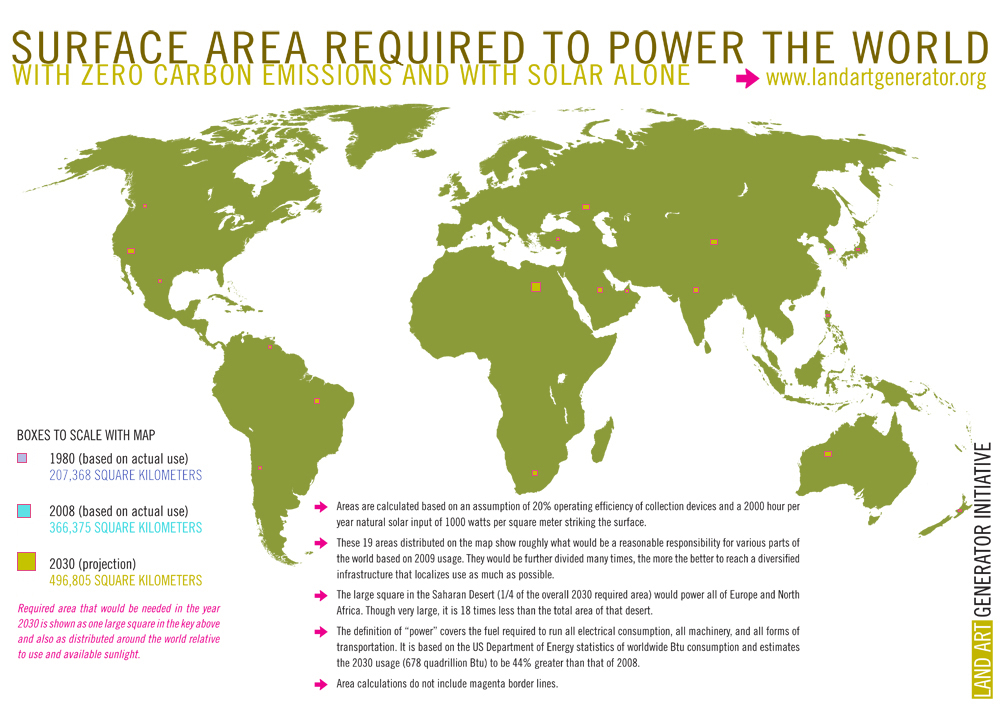
That’s the joke. The Sun is safe, cheap fusion at a distance. Enough sunlight hits the Earth in 30 minutes (I’ve seen figures as low as 2 minutes from the UAE, but am conservative for argument’s sake) to power humanity for a year.
replies(2): >>26674692 #>>26674720 #
9. throwawayboise ◴[] No.26674584[source]
No. Riduculously expensive idea, dangerous and unnecessary.
10. jayd16 ◴[] No.26674608[source]
This is my favorite SimCity 2000 disaster type.
11. kergonath ◴[] No.26674692{5}[source]
We’re never going to cover any significant portion of the Earth with solar panels, though. And the photoelectric effect has efficiency limits.
replies(2): >>26674951 #>>26674980 #
12. pc86 ◴[] No.26674716[source]
What happens after another century of dumping 45+ billion tons of CO2 and other GHGs into the air?

The question is whether it's better to use nuclear power or fossil fuel power. There's little difference, practically speaking, between hemming and hawing about statistically small events happening re: nuclear power, or what we do a lifetime from now, and actively advocating for increased fossil fuel usage.

If nuclear can be replaced with something even cleaner and even safer then I'm all for it. But it's short sighted in the extreme to actively tear nuclear down when the only realistic alternative at that scale is fossil fuel.

replies(2): >>26674760 #>>26674789 #
13. politician ◴[] No.26674720{5}[source]
Unfortunately, the same NIMBY crowd that hates nuclear also hates the idea of fields of solar cells and the idea of fields of wind farms.
replies(1): >>26674910 #
14. DangitBobby ◴[] No.26674751[source]
In a competent society, yes.
15. DangitBobby ◴[] No.26674760[source]
Or the discussion is about nuclear versus other forms of "green" energy.
replies(1): >>26674875 #
16. Daho0n ◴[] No.26674789[source]
>the only realistic alternative at that scale is fossil fuel.

Are the alternatives widespread in places like Denmark not realistic (wind from 50% in 2020 to 84% by 2035)? 4th best energy architecture performance and the second best energy security in the world. Is it not realistic elsewhere?

replies(1): >>26674868 #
17. politician ◴[] No.26674803[source]
The half-life of Tritium is ~12 years. In a scenario where upkeep stopped, eventually enough would decay that the warheads would no longer be able to attain their design yield.
18. politician ◴[] No.26674868{3}[source]
Correct, wind energy is not present in the same amounts everywhere. There are places where wind energy is more available and places where it's not available or marginal. You can't run your AC off of a gentle breeze.

Finding the best places to install wind farms is surprisingly difficult.

replies(1): >>26675082 #
19. dntrkv ◴[] No.26674875{3}[source]
And what do you do when the other forms of green energy aren't available?
replies(1): >>26674948 #
20. toomuchtodo ◴[] No.26674910{6}[source]
And yet, renewables account for almost all new generation being turned up.

Turns out there are lots of places to install panels and turbines where there aren’t NIMBYs.

https://www.eia.gov/todayinenergy/detail.php?id=46416

replies(1): >>26675021 #
21. DangitBobby ◴[] No.26674948{4}[source]
Well, then nuclear is better than fossil fuels. Has that been a barrier to adoption?
replies(1): >>26681129 #
22. toomuchtodo ◴[] No.26674951{6}[source]
Can you provide evidence why we wouldn’t or can’t? We are only limited by panel production and deployment rates. We’re not going to run out of land or raw materials.
replies(1): >>26675770 #
23. DangitBobby ◴[] No.26674969[source]
Well actually I believe they have a rather large upfront carbon footprint, but the question is not whether they are worse than fossil fuels, but whether we should rely on other forms of "green" energy which do not have catastrophic failure conditions or rely on a competent society to safely maintain. We have already failed to stop global warming and we should expect to be in decline, so that's the future we should prepare for.
replies(1): >>26676600 #
24. Pfhreak ◴[] No.26674980{6}[source]
What's 'significant'? We're at the point where we are adding gigawatts of solar capacity annually. That feels significant to me.
replies(1): >>26675918 #
25. yellowapple ◴[] No.26675021{7}[source]
There are also lots of places to build nuclear power plants without NIMBYs.

Point being, NIMBYs often have a rather inflated idea of what counts as "in my back yard".

26. Daho0n ◴[] No.26675082{4}[source]
With enough wind energy couldn't energy transfer between countries and energy storage help? After all it is always windy somewhere. I know energy storage is hard and not enough alone but couldn't for example Sweden and Denmark transfer energy back and forth and only use other energy sources as backup?
replies(2): >>26675446 #>>26681125 #
27. politician ◴[] No.26675446{5}[source]
There's a lot of power loss in transmission over long distances. China is attempting to move power from solar fields from the eastern deserts to its major cities using Ultra High Voltage (UHV) power lines [1], but not without problems.

[1] https://en.wikipedia.org/wiki/Ultra-high-voltage_electricity...

replies(3): >>26675729 #>>26675838 #>>26676542 #
28. bserge ◴[] No.26675607[source]
Soviet-built nuclear power plants did fine... with one notable exception.
replies(1): >>26681183 #
29. jhayward ◴[] No.26675729{6}[source]
> There's a lot of power loss in transmission over long distances.

No, there's not. If one were to build new transmission today one would expect low-single-digits percentage loss per 1,000 miles of distance. It's not enough for anyone to worry about.

30. kergonath ◴[] No.26675770{7}[source]
For a start, 2 thirds of the Earth’s surface are oceans. Then, fields and other agricultural land is about 40% of the land surface area. And we are supposed to grow forests as carbon sinks. Then, you have mountains ranges, which might or might not be good places to put solar panels depending on a whole bunch of factors. Similarly, some deserts can be used to put solar panels, at the cost of long-range transport for the produced electricity, but a lot of them aren’t nice places for this type of installations (either very cold or with wide temperature fluctuations, harsh environment).

That’s a lot of places where we can’t. And we need to be careful where we can put them. We are causing a mass extinction event just because of how we destroy ecosystems and degrade our environment, and crop fields of pastures are much less disruptive than covering massive areas with panels.

I am not saying we don’t or should not use solar panels where it makes sense, just that using the total energy received by the Earth as a measure is not really relevant, because the land we can allocate to that will always be insignificant compared to the surface of the Earth. If you factor land use, it is clear that solar panels by themselves cannot be all of the answer.

replies(1): >>26675893 #
31. gehsty ◴[] No.26675838{6}[source]
HVAC has significant losses, HVDC has less losses and allows power to be transmitted efficiently enough over long distances (guess it depends on what you mean by long).

A good example is North Sea link, linking the north of England to the abundant hydropower in Norway, which should come online this year I think. HVDC links connecting European countries of the length 400-600km are becoming quite common, unfortunately subsea cables are prone to failures and can cause a lot of outages etc.

32. toomuchtodo ◴[] No.26675893{8}[source]
> If you factor land use, it is clear that solar panels by themselves cannot be all of the answer.

Disagree. Rebuttal: https://landartgenerator.org/blagi/archives/127

Direct img link: http://landartgenerator.org/blagi/wp-content/uploads/2009/08...

replies(1): >>26676031 #
33. kergonath ◴[] No.26675918{7}[source]
Significant compared to the Earth’s surface area and the amount of radiation we receive. Sure, we get a lot of energy from the sun. But no, we’re never going to turn more than a tiny fraction of that into electricity. The orders of magnitude just don’t match.
replies(1): >>26678665 #
34. kergonath ◴[] No.26676031{9}[source]
Right. What does it have to do with this? I pointed out that using the total radiation input on Earth as a measure is irrelevant, because we are never going to use anything close to this.
replies(1): >>26676047 #
35. toomuchtodo ◴[] No.26676047{10}[source]
Right! This demonstrates how little land mass needs to be used to power the world entirely from solar. Total solar potential is clear, total land use necessary is clear, ergo solar can power the world. Anything else is hand waving and excuses.
replies(2): >>26676579 #>>26681171 #
36. effie ◴[] No.26676542{6}[source]
Long distance transmission losses are pretty low. Most of energy losses happens in the "last mile" networks.
37. effie ◴[] No.26676579{11}[source]
> ergo solar can power the world

You forgot about clouds, nights and current lack of capability to store/transport energy to mitigate them. This can be solved but it is not trivial.

38. effie ◴[] No.26676600{3}[source]
It is not either solar/wind or nuclear, it is use both. Technology on worldwide scale isn't in decline.
39. Pfhreak ◴[] No.26678665{8}[source]
Ok, but we don't need that much energy. Something close to 200 petawatts continuously strike the surface. Humanity uses something like 15 terawatts. To fully cover our energy needs we'd need to capture less than 1 in 10,000 watts or 0.01% of the sun's energy hitting earth. But I don't think 100% solar is anyone's goal. So we'd need to capture less than that.

So it seems to me that we could absolutely cover a significant amount of our energy use.
40. stjohnswarts ◴[] No.26681125{5}[source]
I'm sure in smaller less populated countries that will work, but in denser, much much larger countries it won't. Think USA, Brazil, China, India, Russia....
41. stjohnswarts ◴[] No.26681129{5}[source]
Yes, NIMBYs
42. stjohnswarts ◴[] No.26681145[source]
That's not really a worry, it's relatively easy to tear down thermonuclear devices and then pitch the plutonium into the deepest part of the ocean.
43. stjohnswarts ◴[] No.26681171{11}[source]
It can't in natural disasters which quickly remove solar power and we also can't store up enough power to handle peak demand in summers and winters. It's nice to act like that's not a problem when you live in some place like San Jose where it doesn't regularly get 110 or -20F
44. stjohnswarts ◴[] No.26681183[source]
I don't know about newer Russian designs (if there are any) but the Soviet era ones are terrible.