This generation is rightfully feeling like they're getting a sore deal.
Many parts of Africa have below 80% literacy rates[1] and that's in their respective language; coming to Europe would likely mean learning a new language as well as learning a completely foreign country. If we're speaking about Germany specifically, Germany didn't colonize as many places as the British, Dutch or French so they are unlikely to speak German.
If you want skilled workers, why not simply train those workers locally?
[1]: https://worldpopulationreview.com/country-rankings/literacy-...
But even before that, everyone I know didn't even consider Germany as a potential place. It's either UK, USA, china or even Malaysia.
In Germany there is a whole industry around recruiting foreign nurses. I work in immigration and a few of my colleagues specialise in that. There are websites and initiatives just for that.
It will get worse. This population is aging.
The issue lies with state subsidies for employing refugees which currently mainly targets Ukrainian workers, though they'll never outright say it: https://www.arbeitsagentur.de/unternehmen/arbeitskraefte/gef...
If you have a job to offer you can now decide if you pay a German out of your own pocket or if you hire a Ukrainian who will end up being cheaper for you because the state supports you in doing so.
Have seen this with bicycle mechanics, nurses, nursery homes, lots and lots of cafés.
Goes without saying that I like Ukrainian people just as much as I like Germans, Syrians, Iranians, Russians, etc.
Nurses aren't actually paid badly (they get paid above minimum wage), they usually don't complain/protest about wages. The problem stems from being understaffed and consequently bad working conditions. The core issues is hospitals being run like private businesses, which means they are not affording redundancy. It's a systemic problem with the medical system, which has little to do with wages, or immigration.
Importing migrants just worsens the underlying problem. You destroy your own pipeline and eventually run out of migrants. Germany needs to pay more and provide a better work environment instead of just finding people desperate enough it seems like a good deal.
Edit: I just checked and the average German nurse salary is (43k in USD vs 88k USD) less than half the average US RN salary. Crazy!
Where did you get this figure?
23.70€/h (~27.60 USD/h) apparently is the average wage for nurses. Working full-time, 38 hours per week, that's 46,831.2€ (54,492.34 USD) per year. Mind you, half of socialized costs, like health insurance is payed by the employer, so you need to adjust figures accordingly. It's of course a totally ridiculous comparison without adjusting for living costs, etc.. Also typically there are 5-6 weeks of paid vacation per year.
https://www.allgaeuer-zeitung.de/pflege/durchschnittsgehalt-...
https://www.payscale.com/research/DE/Job=Registered_Nurse_(R...
I am happy to accept your figure of "slightly more than half" for the sake of this discussion.
> Mind you, half of socialized costs, like health insurance is payed by the employer, so you need to adjust figures accordingly.
Nurses in the US also have half (or more) of costs like health insurance paid for by their employer - in that particular case, almost always much more than half. Half of Social Security retirement tax is paid for by the employer, but additional retirement payments beyond Social Security are usually much less than half. We can probably safely call this a wash.
> It's of course a totally ridiculous comparison without adjusting for living costs, etc..
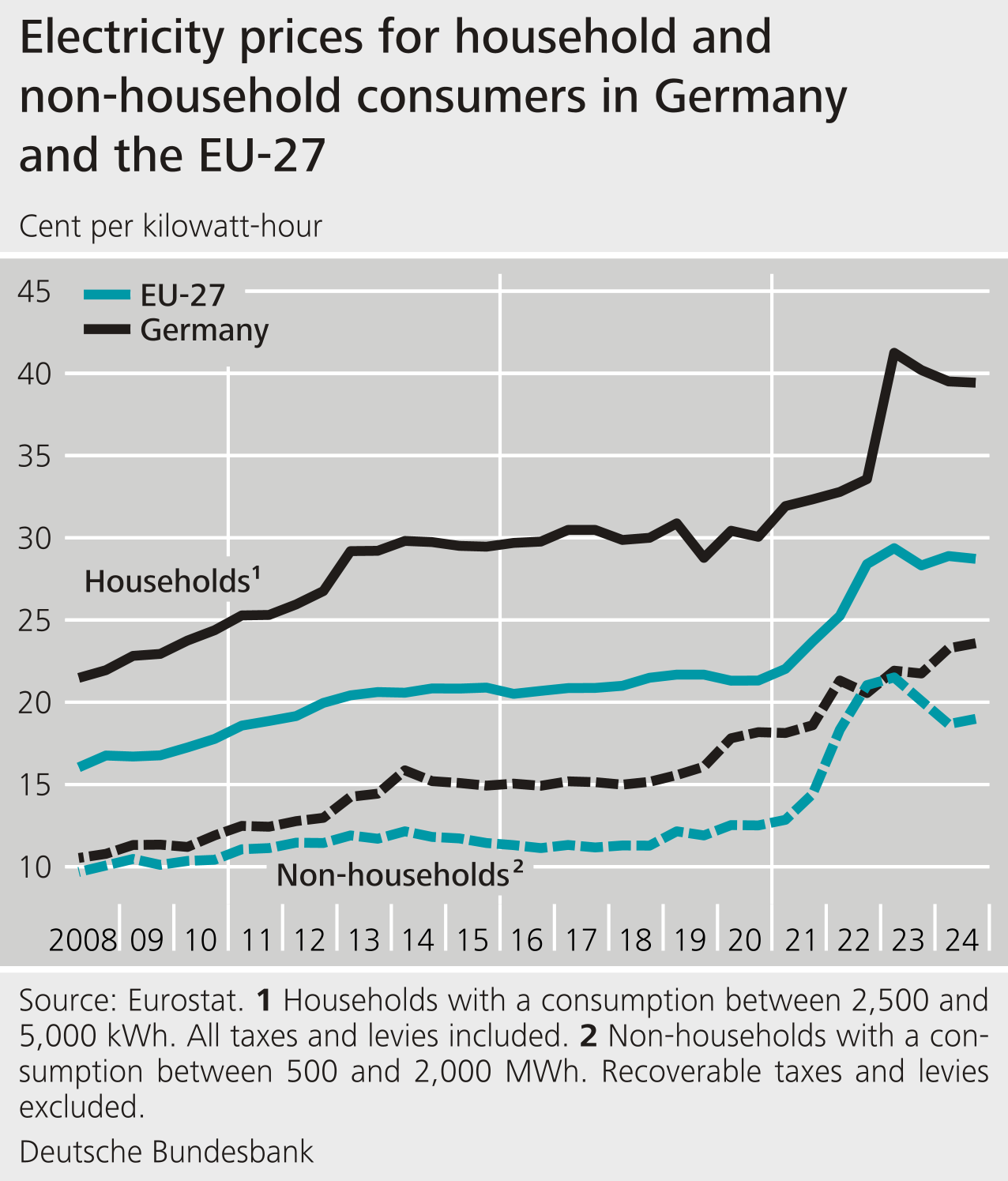
Germany has overall notoriously high living costs. For instance, the electric rate my German friend is paying in east Germany is 4x(!!!![1]) my rate in the US, and she and her husband pay much more for a small apartment than I do a large house. On top of this, German housing often comes ludicrously unfurnished - most Americans would be surprised to learn that renters are often expected to provide their own kitchen. Germany certainly does not win out on housing costs.
Nurses are underpaid. Pay nurses more.
[1] I used to be baffled as to why Germans typically have no AC, only small appliances, often no clothesdryer, etc. Then after learning this I realized that for an average person, running American-style appliances would be totally unaffordable. Even lower class Americans will happily blow hundreds of dollars keeping their house at 60F in 95F degree heat while cooking in their electric oven and running their electric clothesdryer. While this results in "high" bills around $400 here, that'd be $1600 in Germany. You couldn't live like an American there. Even my personal "high" bills which sometimes approach $200 would cause me to cut back severely - $800 would be way too much.
> We can probably safely call this a wash.
Does it tho? Cause in Germany there are no deductibles or co-pay. How many hours do your nurses work for the money? How man vacation days are included.
Btw. the median income in Germany is 52,159 Euro.
> Germany has overall notoriously high living costs.
According to this site, US is 21% more expensive than Germany:
https://www.mylifeelsewhere.com/cost-of-living/germany/unite...
> I used to be baffled as to why Germans typically have no AC, only small appliances, often no clothesdryer, etc. Then after learning this I realized that for an average person, running American-style appliances would be totally unaffordable.
Are you comparing Idaho to Germany? Cause Californians have to pay more for electricity than Germans.
0.23€/kWh is the current price for electricity in Germany. We don't have ACs, because we got well insulated homes and live in a rather cold climate. Modern houses are equipped with heat pumps which can do both. Yes, we now widely heat houses with unaffordable electricity!
https://www.ndr.de/nachrichten/info/Strompreis-aktuell-So-vi...
By the time we're quibbling about deductibles and co-pay, we're not talking about meaningful differences - and of course, it can vary widely. However, when your employer is the medical system, your insurance is usually pretty good.
> How many hours do your nurses work for the money?
36-40 hours is a typical workweek. Around here, it's 36 hours.
> How man vacation days are included
This is, as well-known, not federally mandated, and can vary widely. Leave is also often lumped into many different categories. A look at my local, poor rural hospital system says they get 200 hours of PTO a year starting out, or five weeks, plus holidays.
> 0.23€/kWh is the current price for electricity in Germany
Maybe something has changed. This was what I looked at, and that's not what my friend is paying right now. It's only twice as high as California, which is not representative of the US as a whole.
https://www.bundesbank.de/resource/blob/862768/b159d13929f17...
> We don't have ACs, because we got well insulated homes and live in a rather cold climate.
Yes, and having an AC would put a stop to the German obsession with opening windows to stop mold from forming. But even though climate control would be very convenient even if most of the time it's not necessary, Germans don't have it because they can't afford it. Because professions like nursing are paid too little.
Why is there such resistance to just paying people more? How on earth does it make more sense to import people to pump up the labor supply, suppressing wages, so that you have to continue to import people, because there's no reason for a German to go into a low-paid field with a bad work environment?
Didn't expect that, tbh. Not bad.
> Why is there such resistance to just paying people more?
Because I said elsewhere, nurses are mostly happy with their wages, it's the hospital management and de facto working conditions which suck. Higher wages won't fix these working conditions.
Simply importing people who are desperate for even a below-market (in Germany) wage means that there is no economic incentive for conditions to improve or for wages to rise, and that your own pipeline will continue to dry up, leaving you totally dependent on foreign labor. Aside from any other issues with migrant labor, what happens when that dries up? This is an extremely foolish, shortsighted policy that can be solved by the simple expedient of paying people more.
Everything else you say is correct, but it applies to all German workers. In that sense, it's a somewhat low-paid job. It feels to me like they're more deserving of their income than a keyboard jockey like me.
People don't want to work in these conditions tho. And the public has to pay these wages. Seriously, you are so damn ignorant thinking American free-market bla bla is the fix for everything. It's probably tough to swallow, but quality of life matters here. Why aren't you paying your field and gastronomy workers 100k instead of exploiting illegals?
People here got other options to improve their lives. It's a democracy, the root issue can be fixed politically. Nurses are also organized in unions. So there isn't even "free market" shit all anyway. These unions demand better working conditions not higher wages.
Maybe you should first check basic foundational truths about economics in your own country, before lecturing others?! Despite all the riches, the median income in the US is lower than Germany. You should pay people better over there.
But it’s not. That’s why we’re having this discussion. And whether you want to have a free market or not, the labor market is still driven by money. People will go into fields that pay more money. People will go into fields that pay more money, even if conditions are bad. Yoy seem to think I’m a free markets guy - economically in most respects it’s fair to say I’m a socialist.
Your political solution right now is total nonsense and it doesn’t seem to be getting any better. Following ideological commitments right off a cliff and doing it better than anyone else seems to be the German way. Of course, the degree to which Germany or most any modern country could be said to be a “democracy“ is highly questionable.
Certainly if the German people don’t want to pay Germans what makes it worth it for Germans to become nurses, they have a huge intractable problem.
> Despite all the riches, the median income in the US is lower than Germany
According the the US census data, median income in the US is 81k. In Germany, median income USD appears to be 60k.
> Why aren't you paying your field and gastronomy workers 100k instead of exploiting illegals?
I agree employers should be be imprisoned for hiring illegals and even that most migrant worker visas should be abolished. I made great money for many years working in a restaurant and I was shocked to see in other parts of the country it’s just a matter of course that this goes on, undercutting wages and causing all sorts of problems.
That's household income.
https://en.wikipedia.org/wiki/Personal_income_in_the_United_...
Nevertheless, the article you’re citing still cites American personal income as pretty close to German median income. Subtract taxes and/or adjust for PPP and…
Do you realize how insane this statement is considering the wealth and economic power of America? And as cited above, cost of living is higher, quality of life is lower in the US too. Also why isn't the market correcting itself, hm? You had market deregulation under Clinton, super successful, wasn't it? And where is the money for higher wages coming from?
Listen my point is, before lecturing others on paying people more, mindlessly replaying red scare ideological brainwashing scripts, maybe fix your own damn economy, pay your own people right. You evidently know very little about life in Germany, maybe you should consider possible details and nuances you miss for a strong opinion.
I am fully informed about conditions in Germany. Perhaps you are not fully informed about conditions in America. Even us Americans in flyover states, even solidly working class Americans, even some people I know in trailer parks, have more conveniences and luxuries than the average German. Aside for my preferences for most German social norms, I would prefer to live in Mississippi than anywhere in Germany for the greater material comforts.