Most active commenters
  • dotancohen(5)
  • t_mahmood(4)
  • ifh-hn(3)
  • lproven(3)

←back to thread

518 points LorenDB | 38 comments | | HN request time: 0.606s | source | bottom
1. ifh-hn ◴[] No.46174339[source]
I've used many of these small Linux distros. I used to have Tiny Core in a VM for different things.

I also like SliTaz: http://slitaz.org/en, and Slax too: https://www.slax.org/

Oh and puppy Linux, which I could never get into but was good for live CDs: https://puppylinux-woof-ce.github.io/

And there's also Alpine too.

replies(7): >>46174625 #>>46174654 #>>46174762 #>>46174763 #>>46175297 #>>46175429 #>>46176521 #
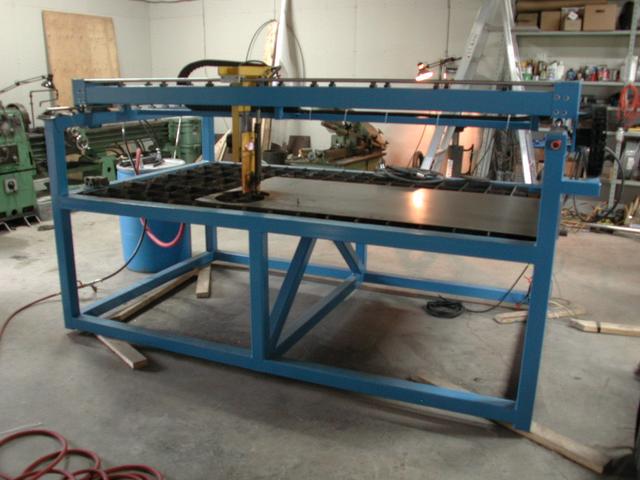
2. samtheprogram ◴[] No.46174625[source]
Wow, Slax is still around and supports Debian now too? Thanks for sharing.
replies(1): >>46174746 #
3. hdb2 ◴[] No.46174654[source]
> I also like SliTaz

thank you for this reminder! I had completely forgotten about SliTaz, looks like I need to check it out again!

4. projektfu ◴[] No.46174746[source]
I used to use it during the netbook era, was great for that.
5. dayeye2006 ◴[] No.46174762[source]
wondering what's your typical usage for those small distros?
replies(6): >>46174792 #>>46174819 #>>46175778 #>>46175850 #>>46176540 #>>46176733 #
6. LorenDB ◴[] No.46174763[source]
Puppy was the first Linux distro I ever tried since it was such a small download (250ish MB) and I had limited bandwidth. Good memories.
7. jbstack ◴[] No.46174792[source]
They can be nice for running low footprint VMs (e.g. in LXD / Incus) where you don't want to use a container. Alpine in particular is popular for this. The downside is there are sometimes compatibility issues where packages expect certain dependencies that Alpine doesn't provide.
8. nopakos ◴[] No.46174819[source]
I use one of them to make an old EEE laptop a dedicated Pico-8 machine for my kids. [https://www.lexaloffle.com/pico-8.php]
9. t_mahmood ◴[] No.46175297[source]
Wondering if it would be a good idea to setup a VM with this. Setup remote connection, and intellij. Just have a script to clone it for a new project and connect from anywhere using a remote app.

It will increase the size of the VM but the template would be smaller than a full blown OS

Aside from dev containers, what are other options? I'm not able to run intellij on my laptop, is not an option

I use Nvim to ssh into my computer to work, which is fine. But really miss the full capacity of intellij

replies(3): >>46175505 #>>46175927 #>>46176058 #
10. sundarurfriend ◴[] No.46175429[source]
> puppy Linux, which I could never get into

In what way? Do you mean you didn't get the chance to use it much, or something about it you couldn't abide?

replies(1): >>46176774 #
11. ornornor ◴[] No.46175505[source]
Isn’t this what GitHub remote envs are (or whatever they call it)?

Never really got what it’s for.

replies(1): >>46175623 #
12. rovr138 ◴[] No.46175623{3}[source]
JetBrains has Gateway which allows connecting to a remote instance and work on it.
replies(1): >>46175798 #
13. jacquesm ◴[] No.46175778[source]
I used DSL for the control of a homebrew 8' x 4' CNC plasmacutter.
replies(1): >>46175987 #
14. t_mahmood ◴[] No.46175798{4}[source]
Yes, but it requires JetBrain running on the client too.
15. hamdingers ◴[] No.46175850[source]
In college I used a Slax (version 6 IIRC) SD card for schoolwork. I did my work across various junk laptops, a gaming PC, and lab computers, so it gave me consistency across all of those.

Booting a dedicated, tiny OS with no distractions helped me focus. Plus since the home directory was a FAT32 partition, I could access all my files on any machine without having to boot. A feature I used a lot when printing assignments at the library.

replies(1): >>46178981 #
16. silasb ◴[] No.46175927[source]
moonlight / sunshine might work if you can't run it locally.

It'd be best with hardwired network though.

17. ja27 ◴[] No.46175987{3}[source]
I was just thinking today how I miss my DSL (Damn Small Linux) setup. A Pentium 2 Dell laptop, booted from mini-CD, usb drive for persistence. It ran a decent "dumb" terminal, X3270, and stripped down browser (dillo I believe). Was fine for a good chunk of my work day.
replies(1): >>46176066 #
18. Aurornis ◴[] No.46176058[source]
Ive experimented with several small distros for this when doing cross platform development.

In my experience, by the time you’re compiling and running code and installing dev dependencies on the remote machine, the size of the base OS isn’t a concern. I gained nothing from using smaller distros but lost a lot of time dealing with little issues and incompatibilities.

This won’t win me any hacker points, but now if I need a remote graphical Linux VM I go straight for the latest Ubuntu and call it day. Then I can get to work on my code and not chasing my tail with all of the little quirks that appear from using less popular distros.

The small distros have their place for specific use cases, especially automation, testing, or other things that need to scale. For one-offs where you’re already going to be installing a lot of other things and doing resource intensive work, it’s a safer bet to go with a popular full-size distro so you can focus on what matters.

replies(2): >>46176435 #>>46177351 #
19. jacquesm ◴[] No.46176066{4}[source]
I ran it on a Via single board computer, a tiny board that sipped power and was still more than beefy enough to do real time control of 3 axis stepper motors and maintain a connection to the outside world. I cheated a bit by disabling interrupts during time critical sections and re-enabling the devices afterwards took some figuring out but overall the system was extremely reliable. I used it to cut up to 1/4" steel sheet for the windmill (it would cut up to 1" but then the kerf would be quite ugly), as well as much thinner sheet for the laminations. The latter was quite problematic because it tended to warp up towards the cutter nozzle while cutting and that would short out the arc. In the end we measured the voltage across the arc and then automatically had the nozzle back off in case of warping, which worked quite well, the resulting inaccuracies were very minor.

https://jacquesmattheij.com/dscn3995.jpg

20. dotancohen ◴[] No.46176435{3}[source]
To really hammer this home: Alpine uses musl instead of glibc for the C standard library. This has caused me all types of trouble in unexpected places.

I'm all for suggestions for a better base OS in small docker containers, mostly to run nginx, php, postgress, mysql, redis, and python.

replies(2): >>46177506 #>>46179052 #
21. forinti ◴[] No.46176521[source]
I tried a handful of small distros in order to give new life to an old laptop with an AMD C-50 and 2GB of RAM.

The most responsive one, unexpectedly, was Raspberry Pi OS.

replies(1): >>46190984 #
22. marttt ◴[] No.46176540[source]
I like using old hardware, and Tiny Core was my daily driver for 5+ years on a Thinkpad T42 (died recently) and Dell Mini 9 (still working). I tried other distros on those machines, but eventually always came back to TC. RAM-booting makes the system fast and quiet on that 15+ years old iron, and I loved how easy it was to hand-tailor the OS - e.g. the packages loaded during boot are simply listed in a single flat file (onboot.lst).

I used both the FLTK desktop (including my all-time favorite web browser, Dillo, which was fine for most sites up to about 2018 or so) and the text-only mode. TC repos are not bad at all, but building your own TC/squashfs packages will probably become second nature over time.

I can also confirm that a handful of lenghty, long-form radio programs (a somewhat "landmark" show) for my Tiny Country's public broadcasting are produced -- and, in some cases, even recorded -- on either a Dell Mini 9 or a Thinkpad T42 and Tiny Core Linux, using the (now obsolete?) Non DAW or Reaper via Wine. It was always fun to think about this: here I am, producing/recording audio for Public Broadcasting on a 13+ year old T42 or a 10 year old Dell Mini netbook bought for 20€ and 5€ (!) respectively, whereas other folks accomplish the exact same thing with a 2000€ MacBook Pro.

It's a nice distro for weirdos and fringe "because I can" people, I guess. Well thought out. Not very far from "a Linux that fits inside a single person's head". Full respect to the devs for their quiet consistency - no "revolutionary" updates or paradigm shifts, just keeping the system working, year after year. (FLTK in 2025? Why not? It does have its charm!) This looks to be quite similar to the maintenance philosophy of the BSDs. And, next to TC, even NetBSD feels "bloated" :) -- even though it would obviously be nice to have BSD Handbook level documentation for TC; then again, the scope/goal of the two projects is maybe too different, so no big deal. The Corebook [1] is still a good overview of the system -- no idea how up-to-date it is, though.

All in all, an interesting distro that may "grow on you".

1: http://www.tinycorelinux.net/book.html
23. ifh-hn ◴[] No.46176733[source]
All sorts. Having a full bootable OS on a CD or USB was always cool. When I left the military and was a security I used to use them to boot computers in the buildings I worked in so I could browse the internet.

Before encryption by default, get files from windows for family when they messed up their computers. Or change the passwords.

Before browser profiles and containers I used them in VMs for different things like banning, shopping, etc.

Down to your imagination really.

Not too mention just to play around with them too.

24. ifh-hn ◴[] No.46176774[source]
No I tried to use it but it didn't click with me. I had it on cd but I'd normally reach for something else.
25. t_mahmood ◴[] No.46177351{3}[source]
Valid points, completely forgot about that part, and even with installation script, I manage to waste a good amount of time downloading and setting things up.

Question, I use VirtualBox, but I feel it's kind a laggy sometimes, What do you use? Any suggestion on performance improvements?

replies(1): >>46185540 #
26. autotune ◴[] No.46177506{4}[source]
How about debian-slim?
replies(1): >>46180232 #
27. jwrallie ◴[] No.46178981{3}[source]
Slax is cool, it used to fit a mini cd, so it was easy to carry around and boot and backup files from machines that refused to boot by themselves.
28. throwaway2037 ◴[] No.46179052{4}[source]

    > Alpine uses musl instead of glibc for the C standard library. This has caused me all types of trouble in unexpected places.
I have no experience with alternative C libs. Can you share some example issues?
replies(2): >>46179700 #>>46191000 #
29. dotancohen ◴[] No.46179700{5}[source]
DNS queries randomly failing:

https://purplecarrot.co.uk/post/2021-09-04-does_alpine-resol...

replies(1): >>46183826 #
30. dotancohen ◴[] No.46180232{5}[source]
I actually have used that, thank you. Excellent choice.
31. LeFantome ◴[] No.46183826{6}[source]
Not an issue anymore
replies(2): >>46185903 #>>46190989 #
32. dotancohen ◴[] No.46185540{4}[source]
Is docker valid for your use case?
replies(1): >>46199412 #
33. dotancohen ◴[] No.46185903{7}[source]
Really? I seen to remember this being considered "not a bug" by some narrow view of the issue.
replies(1): >>46190991 #
34. lproven ◴[] No.46190984[source]
Yep. PiOS Desktop (for x86) was a superb very-lightweight distro.

I carefully put a fairly minimal Xfce setup on it instead of LXDE and RAM usage doubled. It's impressively hand crafted and pruned.

Sadly, though, it hasn't been updated since Debian 11.

35. ◴[] No.46190989{7}[source]
36. lproven ◴[] No.46190991{8}[source]
Fixed over 2 years ago, as I reported at the time.

https://www.theregister.com/2023/05/16/alpine_linux_318/

37. lproven ◴[] No.46191000{5}[source]
> I have no experience with alternative C libs. Can you share some example issues?

No precompiled Linux stuff runs. No Chrome, no 3rd party Electron apps work unless specifically ported. For me, no Slack, no Panwriter, no Ferdium.

Flatpak works, sort of, with restrictions. Snap doesn't.

38. t_mahmood ◴[] No.46199412{5}[source]
Docker to start IntelliJ and access remotely from my Laptop, will have to tunnel. Hm, I should give this a try. I was not sure if Docker+GUI goes well.